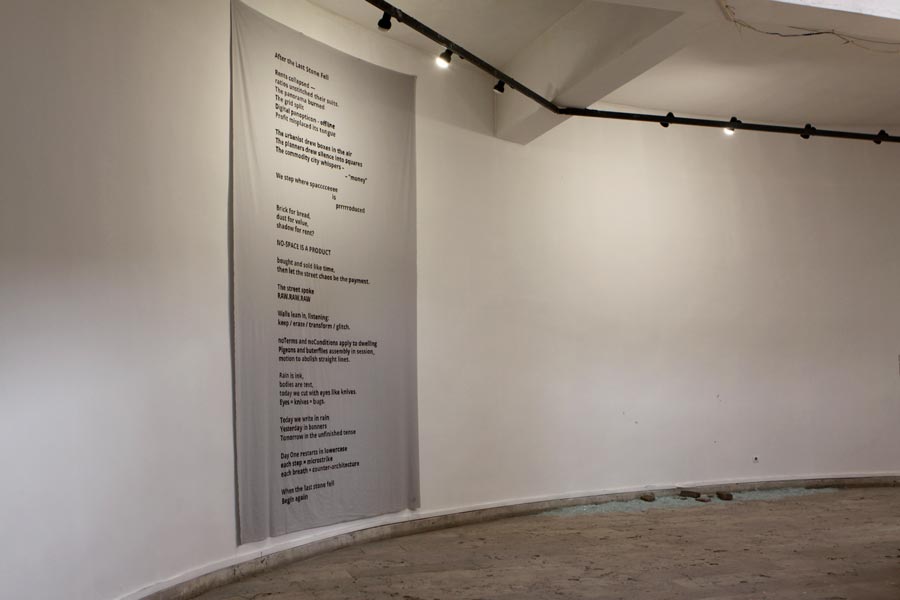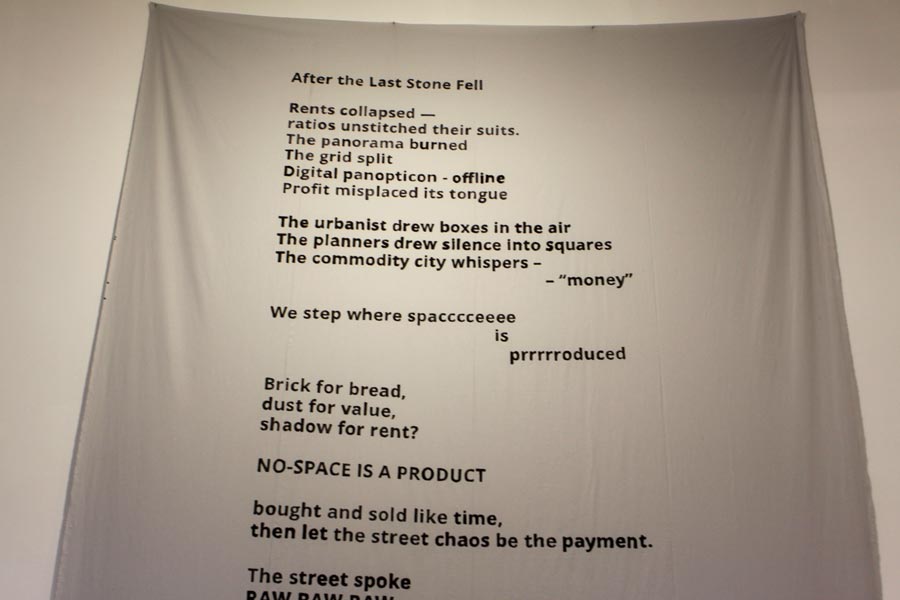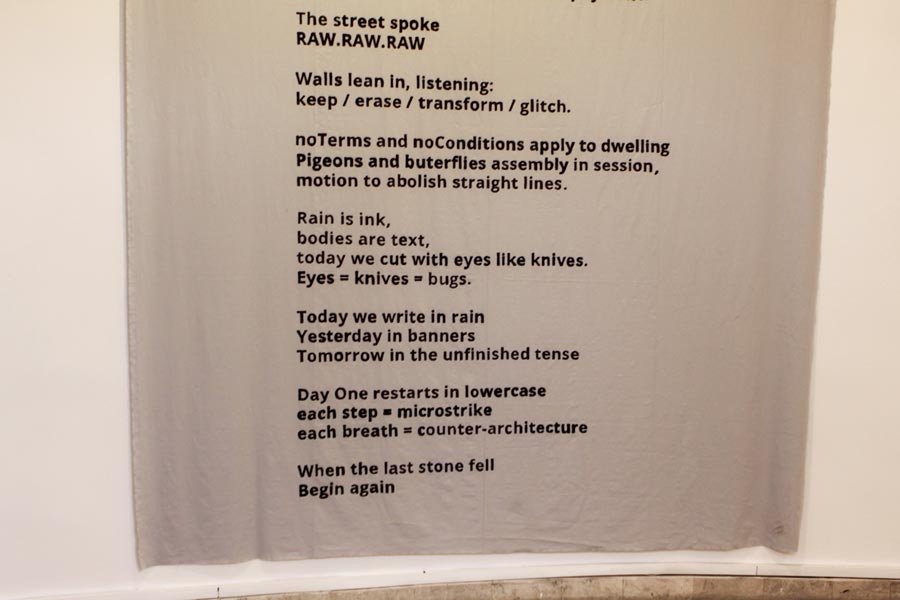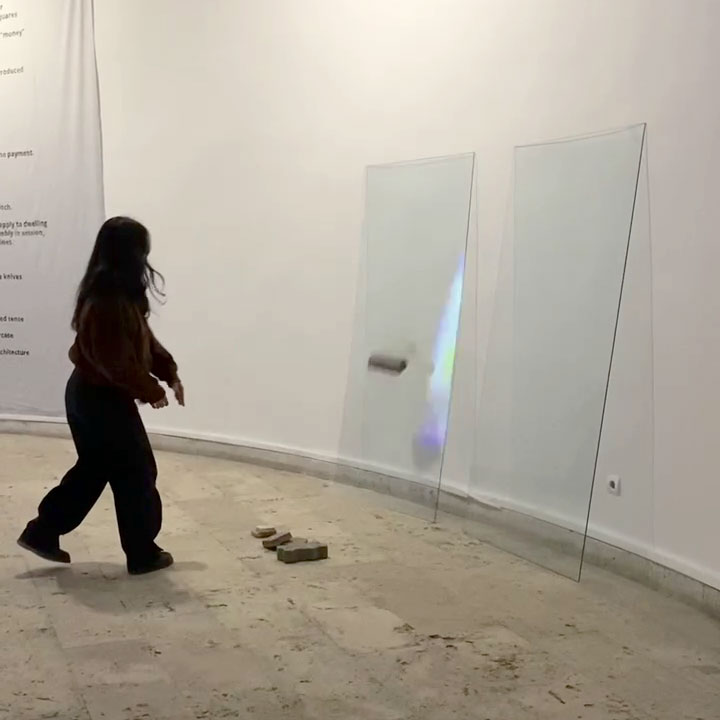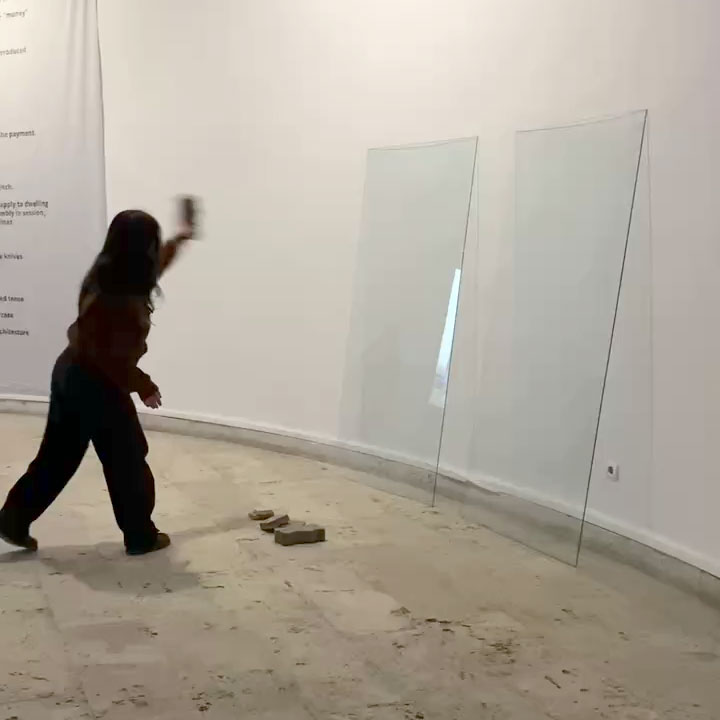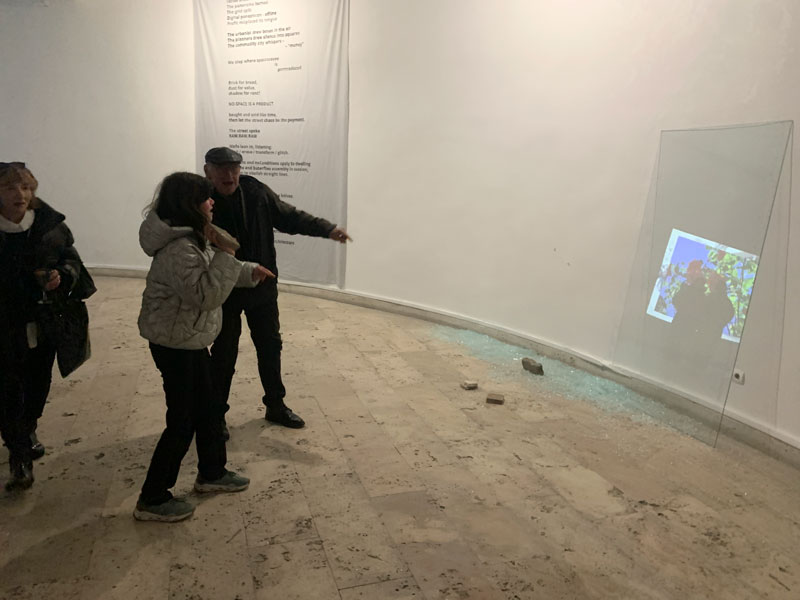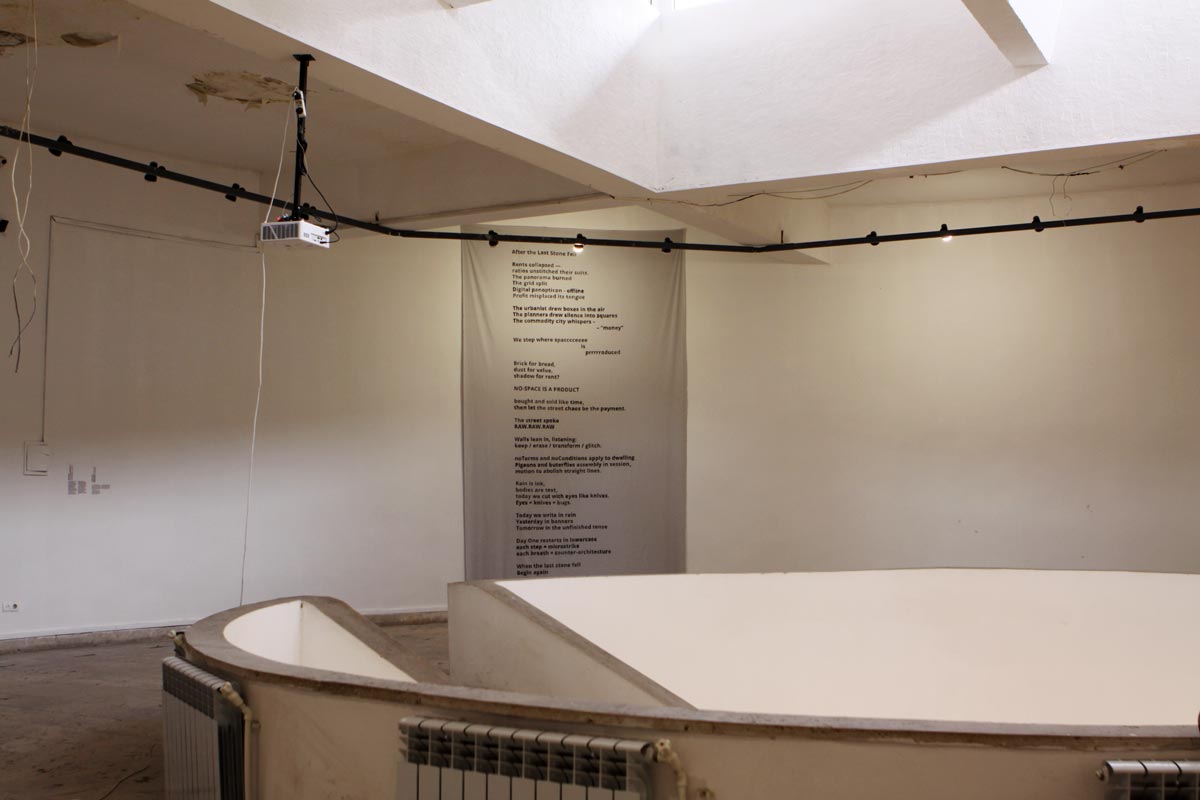
The primary support of the work is a dense, concrete-toned textile, inscribed with. Within the internal fiction of the installation, the poem After the Last Stone Fell is presented as the spontaneous, polyvocal manifesto of an imagined collective—a group supposedly assembled in Freiburg on "Day One" of a post-revolutionary landscape to dictate what of the urban grid should be kept, transformed, or erased. In reality, the collective is an invention; the authorship of the poem belongs entirely to the artist. A collective poem written without a collective.
The poem is based on the of Henri Lefebvre’s book “Urban revolution” and it translates into typographic rhythm, mapping the collapse of the "commodity city" and formally asserting that space is not a neutral void, but a product to be contested.
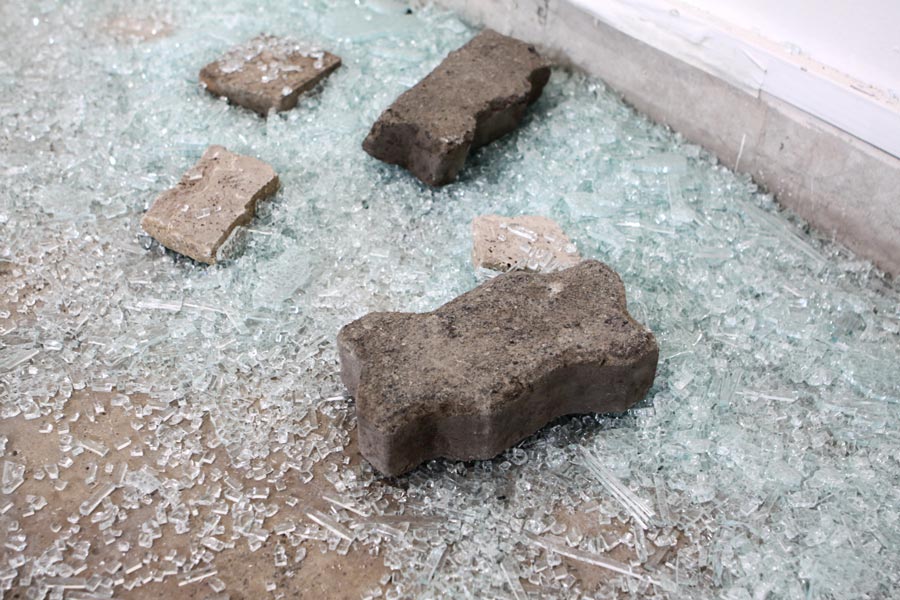
The glass panes, situated as transparent intermediaries between the spectator and the textile support, function as the final, interactive stanzas of the poem itself.
They represent the fragile transparency of the status quo, the barriers that separate our lived reality from our potential futures.
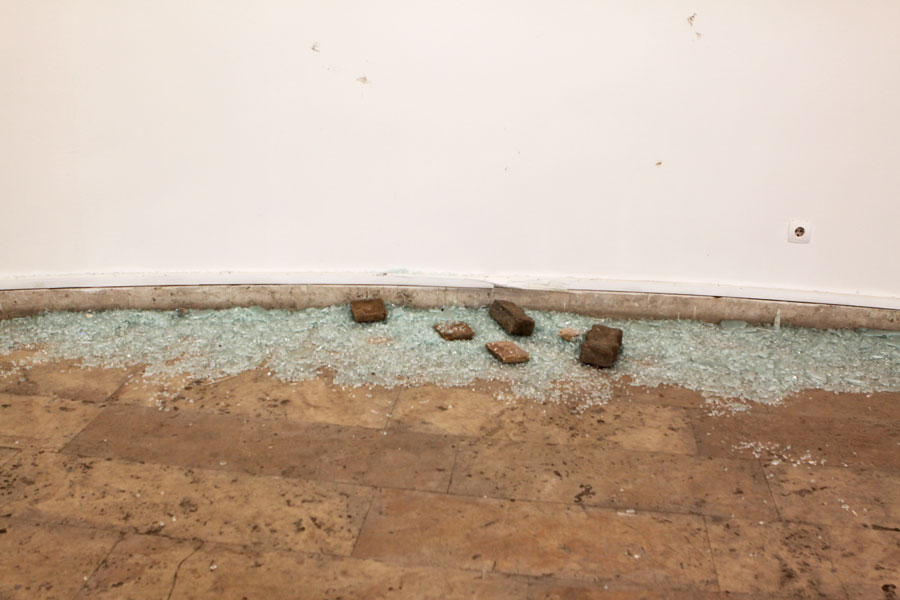
You are invited to pick up a brick. These are the discarded remains of the city—the debris of both construction and collapse. By using them to shatter the glass, you perform the first act of "Day One." The invitation to shatter these panes is not a call for senseless destruction, but a calculated gesture of erasure and liberation. The sound of the shattering is the opening note of a new dialogue.
Vahram Aghasyan 2026