That earlier gesture appropriated the iconography of war through the most precarious of materials, exposing the instability beneath its claims to force. This repetition takes place within a different political context, where the conditions of militarization, circulation, and representation have been reconfigured but not dissolved.
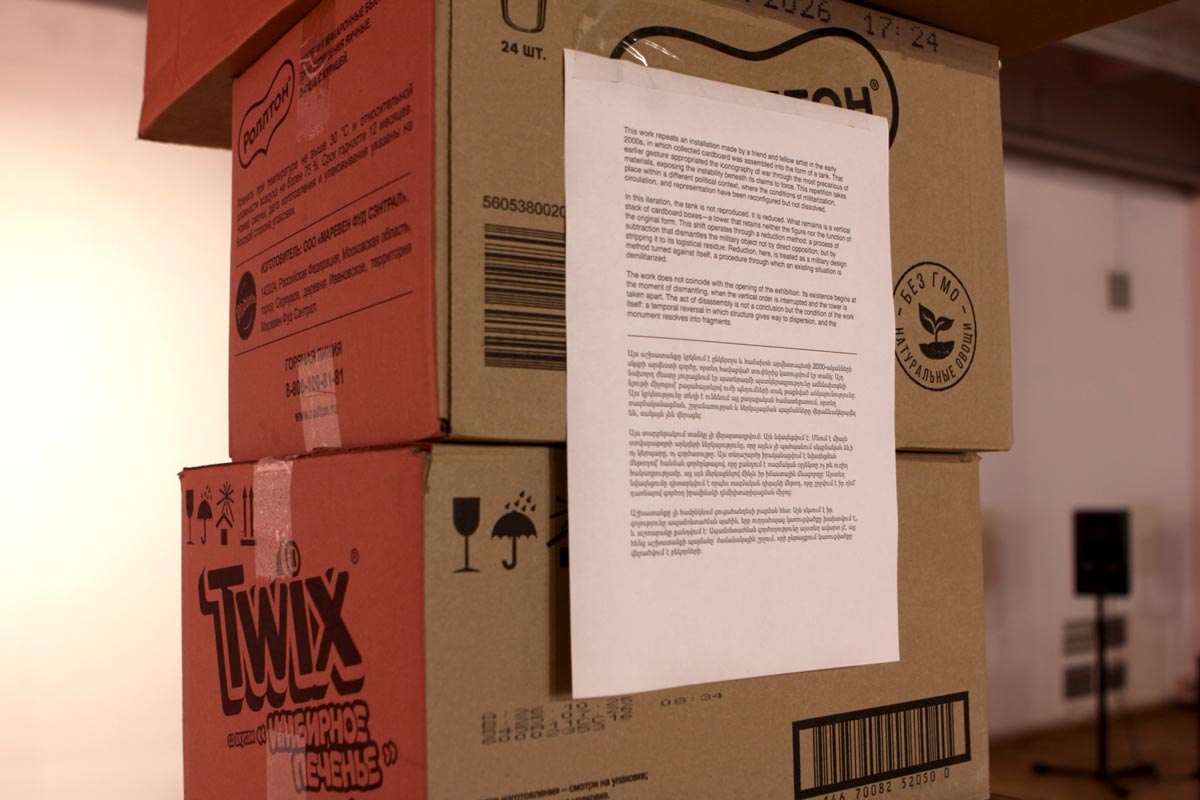
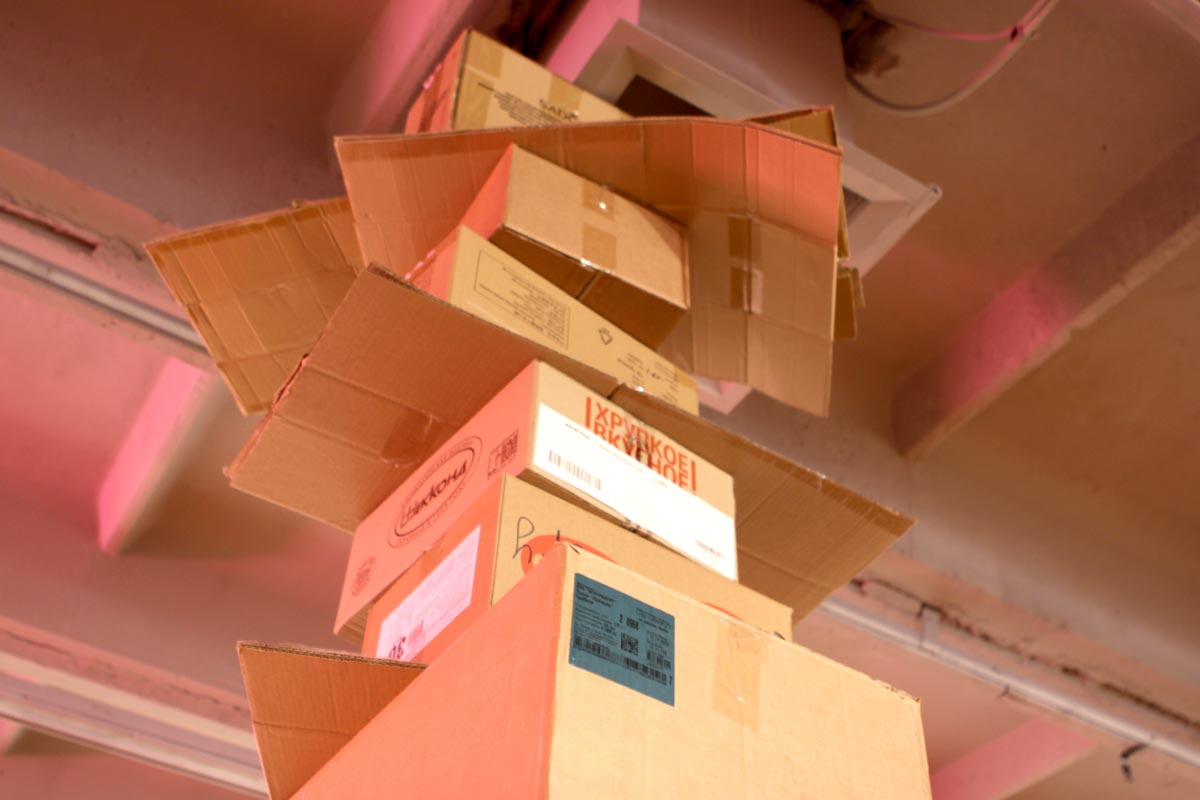
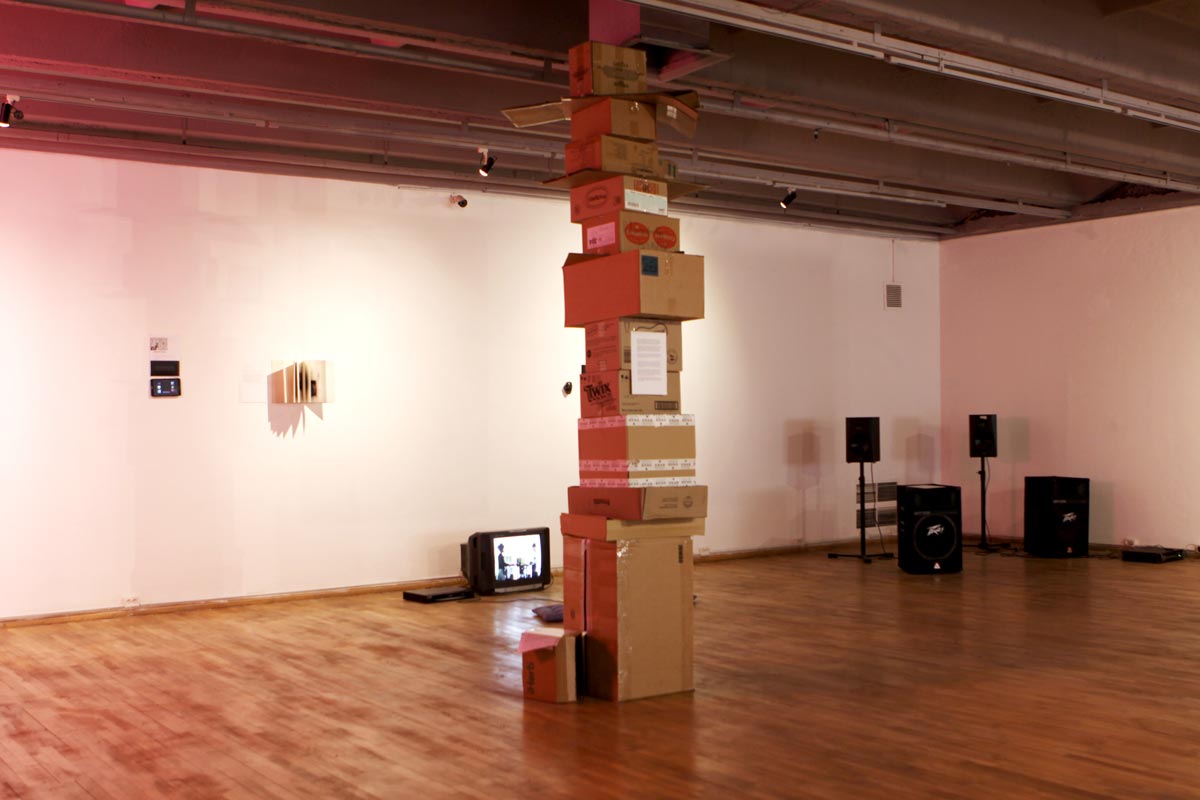
In this iteration, the tank is not reproduced. It is reduced. What remains is a vertical stack of cardboard boxes—a tower that retains neither the figure nor the function of the original form. This shift operates through a reduction method: a process of subtraction that dismantles the military object not by direct opposition, but by stripping it to its logistical residue. Reduction, here, is treated as a military design method turned against itself, a procedure through which an existing situation is demilitarized.
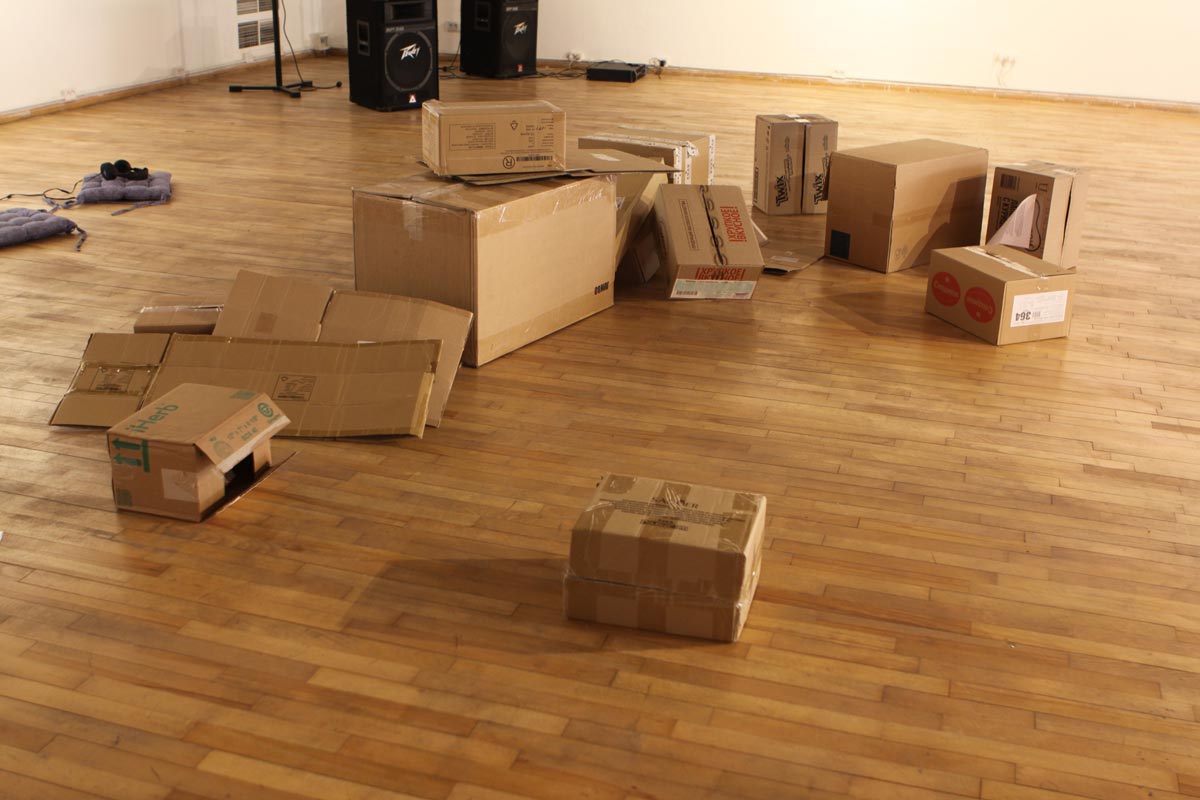
The work does not coincide with the opening of the exhibition. Its existence begins at the moment of dismantling, when the vertical order is interrupted and the tower is taken apart. The act of disassembly is not a conclusion but the condition of the work itself: a temporal reversal in which structure gives way to dispersion, and the monument resolves into fragments.